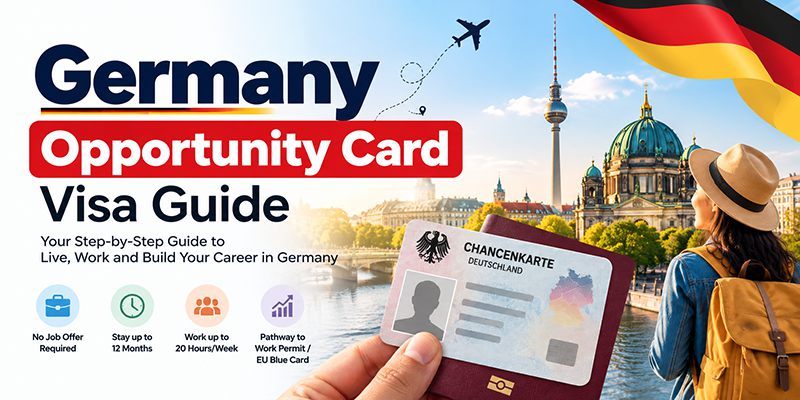
Many skilled professionals dream of working in Germany, but surprisingly, the biggest challenge isn't getting approved for the Opportunity Card. The real challenge is knowing how to use it effectively once you arrive.
Every year, qualified engineers, IT professionals, healthcare workers, and skilled tradespeople move to Germany with high expectations. Some secure jobs within a few months, while others struggle despite having strong qualifications. The difference is rarely talent. It usually comes down to preparation, strategy, and understanding how the German job market works.
The Germany Opportunity Card (Chancenkarte) is much more than a visa. It is a structured pathway that allows qualified professionals to enter Germany, explore the job market, meet employers directly, and convert their stay into a long-term work permit after securing employment.
If used correctly, it can become one of the fastest routes to building a successful career in Germany.
What Is the Germany Opportunity Card?
The Germany Opportunity Card (Chancenkarte) is a residence permit introduced to help skilled professionals from non-EU countries enter Germany and search for employment without requiring a job offer before arrival.
Unlike traditional work visas, the Opportunity Card gives candidates the flexibility to enter Germany first and conduct their job search from within the country.
Key Benefits of the Opportunity Card
No Job Offer Required
One of the biggest advantages of the Opportunity Card is that applicants do not need an employment contract before applying. This removes one of the most common barriers faced by international job seekers.
Stay in Germany for Up to One Year
The card allows qualified professionals to live in Germany for up to 12 months while searching for suitable employment opportunities.
Work While Searching for a Job
Opportunity Card holders can work up to 20 hours per week during their stay. This provides an opportunity to earn income while actively pursuing full-time employment.
Participate in Trial Employment
Applicants can undertake short trial jobs (Probearbeit) with potential employers for up to two weeks. This allows both the employer and candidate to evaluate whether they are a good fit before making a long-term commitment.
Convert to a Work Permit or EU Blue Card
Once you secure a qualified job offer, you can apply for an employment residence permit or an EU Blue Card without leaving Germany.
Why Germany Needs International Talent
Germany has one of the largest economies in Europe and continues to face significant labor shortages across multiple industries.
An aging population, industrial expansion, digital transformation, and the transition toward renewable energy have increased demand for skilled professionals.
Industries with Strong Demand
Information Technology
Germany continues to recruit professionals in:
-
Software Development
-
Cloud Computing
-
Cybersecurity
-
Data Engineering
-
Artificial Intelligence
-
DevOps
Engineering
Engineering remains one of Germany's strongest sectors, creating opportunities for:
-
Mechanical Engineers
-
Automotive Engineers
-
Mechatronics Engineers
-
Electrical Engineers
-
Civil Engineers
-
Manufacturing Engineers
Healthcare
Germany faces an ongoing shortage of:
-
Nurses
-
Doctors
-
Physiotherapists
-
Healthcare Technicians
-
Medical Specialists
Manufacturing and Industrial Operations
Germany's globally recognized manufacturing sector actively hires:
-
Production Engineers
-
Automation Specialists
-
Supply Chain Professionals
-
Quality Engineers
-
Maintenance Engineers
Skilled Trades and Construction
Demand remains high for:
-
Electricians
-
Welders
-
HVAC Technicians
-
Construction Supervisors
-
Industrial Technicians
Professionals in these shortage occupations often experience stronger demand and more employment opportunities.
Understanding the Qualification Pathways
Before starting your application, it is important to determine which eligibility route applies to your situation.
Route 1: Recognized Skilled Professional
If your university degree or vocational qualification is already recognized as equivalent to a German qualification, you may qualify directly.
Recognition is typically verified through:
-
Anabin Database
-
ZAB Statement of Comparability
Applicants who qualify through this route generally do not need to rely on the points system.
This is often the fastest and simplest pathway.
Route 2: Points-Based System
Applicants whose qualifications are not fully recognized may still qualify through Germany's points-based assessment system.
To be eligible, you must score at least six points and meet the minimum language and qualification requirements.
Factors Considered Under the Points System
Professional Experience
Relevant work experience significantly strengthens an application.
-
2+ years of experience can contribute valuable points.
-
5+ years of experience may result in a higher score.
Language Skills
German language proficiency remains one of the strongest factors in the assessment process.
Higher German language levels generally result in more points.
Strong English proficiency may also contribute additional points.
Age
Applicants under 35 years of age receive additional points, while those between 35 and 40 may also qualify for age-related points.
Previous Experience in Germany
Applicants who have previously lived in Germany legally for at least six months may receive additional consideration.
Joint Applications
Couples applying together may receive additional points depending on their qualifications and circumstances.
Financial Requirements You Must Prepare For
Before approval, applicants must demonstrate that they can financially support themselves during their stay in Germany.
Blocked Account (Sperrkonto)
Most applicants satisfy this requirement through a blocked account.
Currently, applicants are generally expected to demonstrate approximately:
-
€1,091 per month
-
Around €13,092 for one year
These funds remain protected and are released gradually during your stay.
Declaration of Commitment
In some situations, a sponsor residing in Germany may provide financial support through a formal Declaration of Commitment (Verpflichtungserklärung).
Health Insurance
Valid health insurance coverage is mandatory throughout the application process and during your stay in Germany.
Step-by-Step Germany Opportunity Card Process
Step 1: Verify Your Qualification Recognition
Begin by checking whether your degree appears in the Anabin database.
If additional verification is required, obtain a Statement of Comparability from ZAB.
This step should be completed as early as possible because recognition procedures can take time.
Step 2: Prepare Your Professional Documents
Gather all supporting documents, including:
-
Degree Certificates
-
Academic Transcripts
-
Experience Letters
-
Language Certificates
-
Passport
-
Passport Photographs
Step 3: Create a German-Style Resume
German employers prefer structured and professional resumes.
A strong German CV should include:
-
Professional Summary
-
Technical Skills
-
Work Experience
-
Certifications
-
Education
-
Languages
Focus on measurable achievements rather than job responsibilities alone.
Step 4: Arrange Financial Proof
Open and fund your blocked account or prepare an alternative approved financial arrangement.
Step 5: Purchase Health Insurance
Ensure your policy satisfies German visa requirements.
Step 6: Submit Your Application
Applications can typically be submitted through the German Consular Services Portal or the appropriate German Embassy or Consulate.
Step 7: Attend Your Appointment
Complete biometrics, verification procedures, and any additional requirements requested by the authorities.
Step 8: Travel to Germany and Begin Your Job Search
Once approved, you can relocate to Germany and begin actively pursuing employment opportunities.
How Successful Candidates Actually Find Jobs in Germany
Obtaining the Opportunity Card is only the first step.
The candidates who secure jobs fastest typically follow a structured job search strategy.
Learn German as Early as Possible
While many international companies operate in English, German language skills remain a significant advantage.
Candidates with German language skills often receive more interview invitations and demonstrate stronger commitment to long-term integration.
Build a Strong LinkedIn Profile
Recruiters actively use LinkedIn to identify international talent.
Ensure your profile clearly highlights:
-
Technical Skills
-
Certifications
-
Projects
-
International Career Goals
Create a Xing Profile
Many traditional German companies continue to use Xing as a recruitment platform.
Maintaining a professional profile on both platforms can increase visibility.
Look Beyond Berlin and Munich
Many international candidates focus exclusively on major cities.
However, Germany's strongest hiring often comes from medium-sized companies known as the Mittelstand.
Cities such as:
-
Stuttgart
-
Düsseldorf
-
Nürnberg
-
Leipzig
-
Mannheim
-
Karlsruhe
offer excellent career opportunities and often face less competition.
Use Trial Jobs Strategically
The Opportunity Card allows participation in short trial employment periods.
Many successful candidates convert these trial opportunities into permanent employment contracts.
Network Actively
Attend:
-
Industry Meetups
-
Career Fairs
-
Professional Networking Events
-
Employer Information Sessions
Building local connections can significantly accelerate your job search.
Common Mistakes That Delay Job Success
Many candidates make avoidable mistakes after arriving in Germany.
Waiting Until Arrival to Start Applying
Begin networking and submitting applications before traveling.
Ignoring German Language Learning
Even basic German can improve employability.
Using a Generic Resume
German employers expect resumes tailored to the specific role.
Focusing Only on Large Corporations
Many excellent opportunities exist within medium-sized companies.
Underestimating the German Hiring Process
Interview timelines may be longer than in other countries, requiring patience and consistent follow-up.
Final Thoughts
The Germany Opportunity Card represents one of the most promising pathways for skilled professionals who want to build a career in Europe.
However, success depends on much more than obtaining visa approval. Candidates who prepare their qualifications properly, understand the German job market, develop language skills, and adopt a strategic job search approach consistently achieve better outcomes.
With the right planning and execution, the Opportunity Card can become the first step toward long-term employment, career growth, and future residency opportunities in Germany.


